
Eau Claire River – Marathon County
This is one of the best paddling rivers in Central Wisconsin. Highlights include fun rapids, outcrops, boulder gardens and incredibly clear water.
Trip Reports
Wayside Park to Hwy I
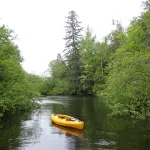
Date Paddled: June 7th, 2025
Distance: 5.2 miles
Time: Expect 2 hours
While lacking the boulder gardens and scenic, exposed bedrock of the Lower Eau Claire, this is still a pleasant trip with clear water and nice woods.
Read More...Cty Rd I to Hwy 64
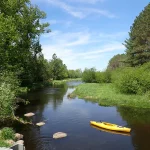
Date Paddled: May 30th, 2026
Distance: 6.1 Miles
Time: Expect 3 hours
Following up on my 2025 trip, I headed back to the Upper East Branch of the Eau Claire River to see what the next leg was like. It turned out to be a trip of opposites. The first stretch was a bit bland and alder-heavy, but the second half was an attractive wooded corridor with occasional meadows and boulder gardens.
Read More...Bear Lake Road to Hwy 52
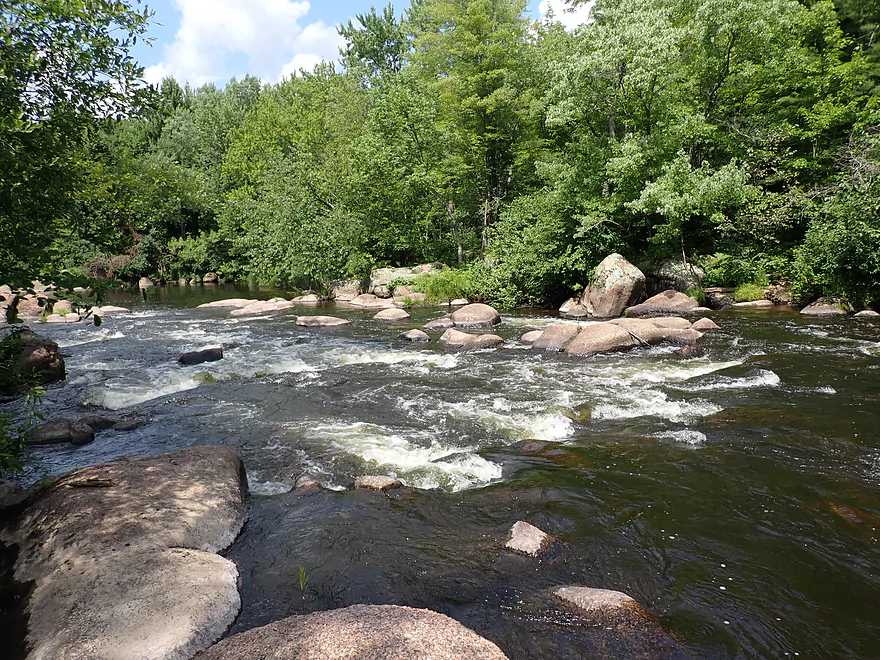
Date Paddled: August 17th, 2019
Distance: 3.6 miles
Time: 4 hours 12 minutes (for pictures)...90 minutes would be more typical)
One of central Wisconsin's best. Dense boulder gardens, fun rapids, and clear water make this a fantastic paddle.
Read More...Dells of the Eau Claire Park to Dells of the Eau Claire Park
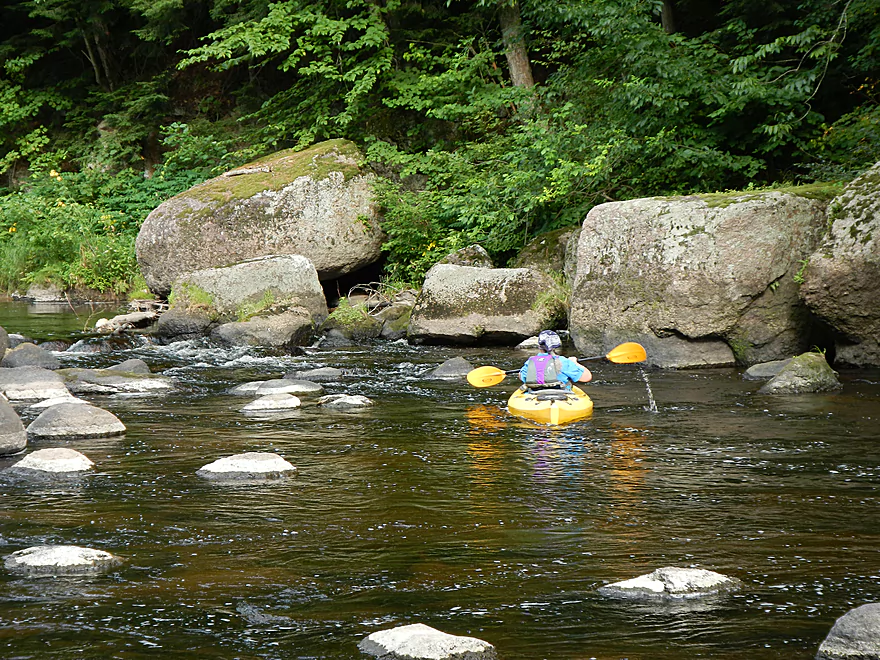
Date Paddled: August 10th, 2013
Distance: 2.25 Miles
Time: 1 hour 46 minutes
The initial plan for this trip was to paddle the Eau Claire River either 7 miles above Eau Claire Dells County Park or 7 miles below. (Note: Wisconsin has two Eau Claire rivers and this is the Wausau one…not the Chippewa River one.) At this time of the year, the Eau Claire runs very low, […]
Read More...Dells of the Eau Claire Park to Eau Claire River Road
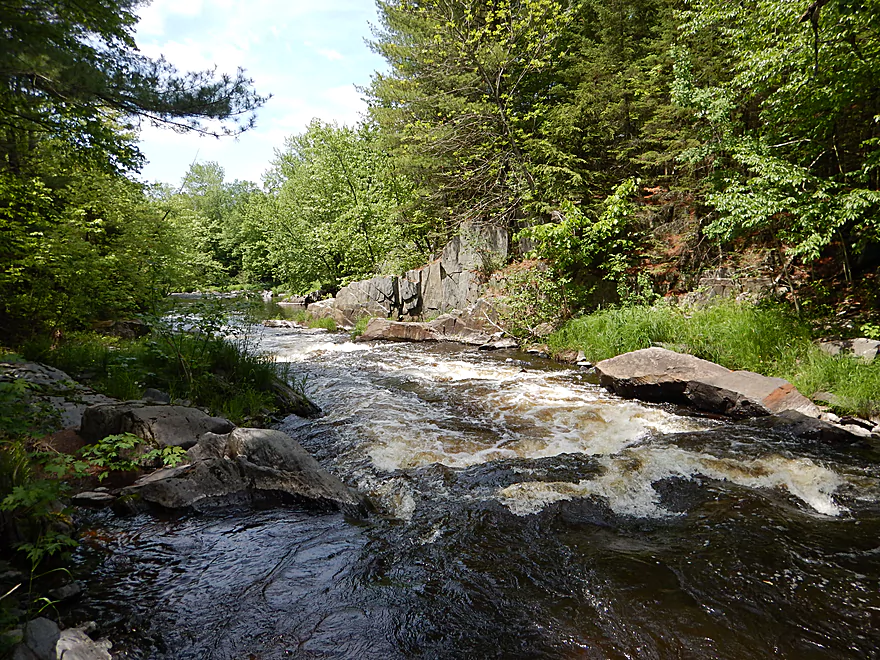
Date Paddled: May 30th, 2016
Distance: 6.58 Miles
Time: 3 hours 15 minutes
One of the best paddling prospects in the state. An amazing combination of intermediate rapids, dells and boulder gardens that ranks among my all time favorites.
Read More...Edwin's Park to Ross Ave Launch
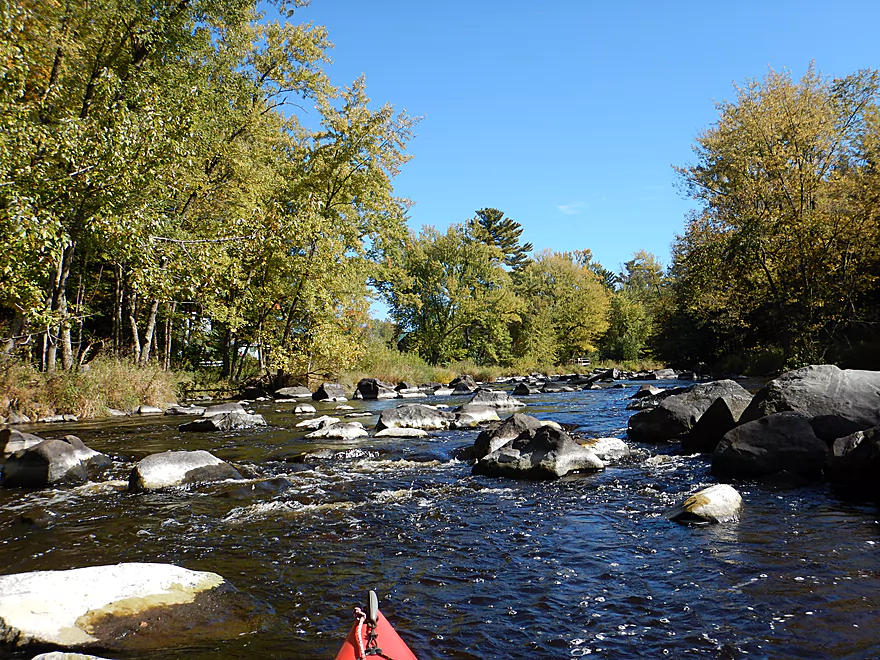
Date Paddled: October 2nd, 2016
Distance: 7.7 miles
Time: 4 hours 17 minutes
A surprisingly nice paddle through suburban Wausau with some fun rapids and boulder gardens.
Read More...Clubhouse Road to Ross Road
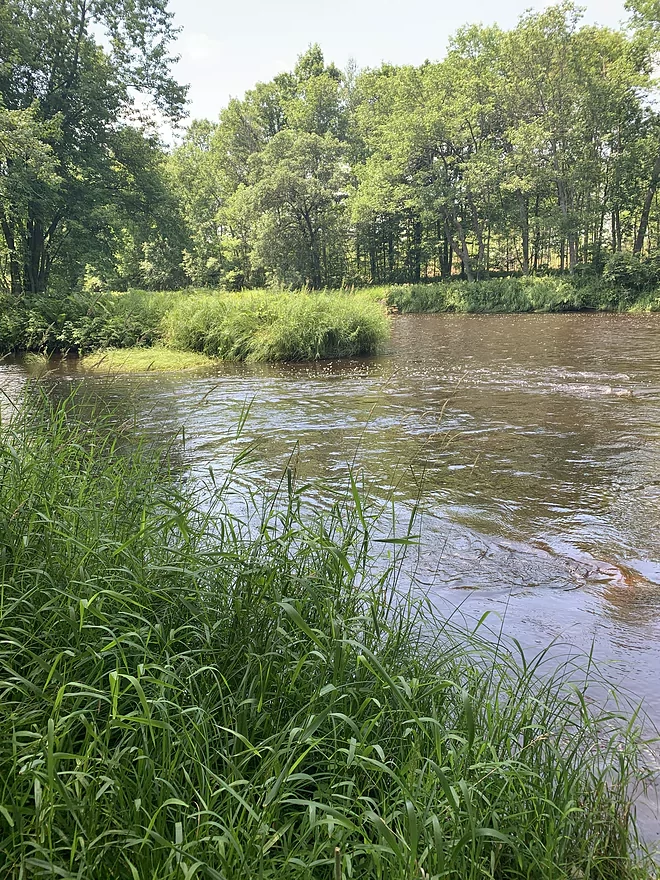
Date Paddled: July 23rd, 2020
Distance: 7.7 miles
Time:
A guest review for the Eau Claire River by Wausau.
Read More...Overview Map
Detailed Overview
Click here to see an overview of the Eau Claire River.
East Branch:
- Upstream from Wayside Park: The river this far upstream might be small and brushy, but should be mostly navigable.
- Hwy 45/Wayside Park to Cty I: 5.1 miles.
- Wayside Park to Cty B: 1.3 miles. Upstream from Cty C the river flows through an attractive residential area with a few nice boulder gardens. There is one logjam to portage. Downstream from Cty C the river is more brushy and less attractive. This is the weakest part of the East Branch IMO.
- Cty B to Bluebell Road: 1.7 miles. This is a nice wooded stretch with some alders, but also some pines and spruce.
- Bluebell Road to Cty I: 2.1 miles. This leg starts narrow and deep, flowing past mostly submerged boulders, then widens out and becomes more shallow. This is a solid stretch that is popular with trout fishermen.
- Cty I to Hwy 64: 6.1 miles.
- Cty I to River Road: 1.1 miles. This is brushy and IMO not that interesting with one major logjam.
- River Road to Cty H: 1.1 miles. A bit more open than the preceding stretch, but still brushy and not super interesting.
- Cty H to Spring Road: 2.0 miles. The first half is a bit overgrown, but the second half is really nice with some boulder gardens, attractive woods, and fun rapids.
- Spring Road to Hwy 64: 1.5 miles. More open and not as rocky as the previous sections, but nice with attractive meadows.
Main Branch:
- Hwy 64 to Cty Y: 2.7 miles. West Branch joins up, significantly enlarging the river. Thick woods and canopies crowd the river. There might be some logjams on this stretch.
- Cty Y to Hanson Road: 1.7 miles. A very dense and wooded section. Maybe a few light rapids but nothing major.
- Hanson Road to Hwy G: 4.3 miles. More dense woods and some light rapids. Possibly a logjam....otherwise should be a nice stretch.
- Cty G to Bear Lake Road: 3.0 miles. A good prospect, but I don't believe there are rapids.
- Bear Lake Road to Hwy 52: 3.6 miles. A great five star section with many boulder gardens and rapids (a few Class 2s and one Class 3).
- Hwy 52 to Dells of the Eau Claire Park: 4.1 miles. Really neat section with rapids and fantastic rock walls. Rapids are less serious than the upstream leg, but do include a Class 2 I believe.
- Dells of the Eau Claire Park to Cty Y: 0.2 miles. This section is called "The Ledges" and is typically Class 2, but is Class 3 in higher water. The dam should be portaged river right (there are downed trees in the water to contend with below the dam).
- Cty Y to Cty N: 6.6 miles.
- Cty Y to Cty Z: 2.0 miles. This starts with the famous Dells that should be portaged. There is a portage path (right/north) but it is steep. I recommend instead launching from either the south or north trails. After the Dells is a great section which includes very scenic rock walls and Class 2 rapids.
- Cty Z to Cty N: 4.6 miles. More flatwater, but still many rapids, including a Class 3 by Lower Dells Island. Badger Road is a steep but alternate access point.
- Cty N to Clubhouse Road (aka Edwin's Park): 3.5 miles. Pleasant, but I suspect this lacks any serious rapids. Popular with locals and the liveries.
- Edwin's Park to Ross Ave: 7.8 miles.
- Edwin's Park to Cty J: 4.1 miles. A nice section with a few rapids and boulder gardens. The Mountain-Bay State Trail pull-off is an alternate access option.
- Hwy J to Ross Ave: 3.7 miles. A great section with more rapids and boulder gardens.
- Ross Ave to Yellowbanks Park: 2.7 miles. I don't know much about this section...there are some rapids.
- Yellowbanks Park to Eau Claire River Conservancy: 2.7 miles. A narrow wooded section. Not sure if the Conservancy is accessible during low water.
- Eau Claire River Conservancy to the Brooks & Ross Dam (aka Drott Street): 1.5 miles. Probably boring flowage paddling. After the dam you are on the Wisconsin River (and another flowage).
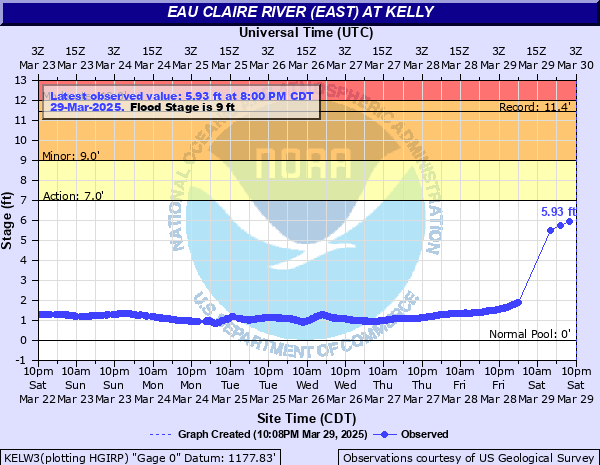
Nearby Guages
Videos
Comments
How did your trip turn out? Questions or comments? Feel free to leave your feedback.
